
Home > Company News
WEB SUMMARY Portal-related risk in hip arthroscopy spans preoperative planning, traction, fluid management, and postoperative review. This article outlines practical team safeguards.
Body habitus, hip mobility, prior surgery, bony anatomy, capsular condition, and neurovascular anatomy all affect portal difficulty. The team should verify traction equipment, perineal-post position, fluoroscopic capability, and backup instruments, and should explain that temporary or persistent sensory changes, numbness, perineal discomfort, and joint swelling can occur.
Traction opens the joint but can also stretch or compress the perineum and pudendal, sciatic, or other soft-tissue structures. The perineal post should be positioned to distribute pressure, the lowest effective traction force should be used, and continuous traction time should be limited. When traction is released or the hip position is changed, instruments must be rechecked to confirm that they remain in a safe location.
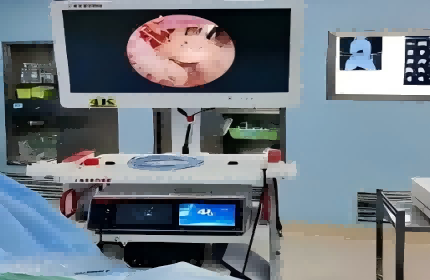
Labral penetration, cartilage scratches, guidewire bending or breakage, and scope-instrument collision are important concerns during portal creation and surgery. If the needle direction is unexpected, resistance increases suddenly, or the endoscopic anatomy cannot be confirmed, advancement should stop. Guidewire position should be verified fluoroscopically, and cannula insertion should maintain a safe relationship with the femoral head contour.
Continuous irrigation is necessary for visualization, but fluid can extravasate into periarticular or retroperitoneal tissues. The team should monitor flow, return, periarticular tension, and abdominal contour while limiting operative time and fluid exposure. Progressive swelling or respiratory or circulatory change should prompt a pause and assessment rather than a reflexive increase in irrigation pressure.
Postoperative care includes attention to pain, sensory and motor changes, joint swelling, wound drainage, and thrombotic risk. Rehabilitation should be individualized to capsular management, cartilage or labral repair, bone quality, and functional demands. Ultimately, hip arthroscopy safety depends not on portal names alone, but on a team process for localization, verification, pausing, and conversion when needed.
Medical content notice: This article is intended for professional health communication and website editorial use. It is not a diagnosis, treatment recommendation, or endorsement of a specific technique. Positioning, portals, traction settings, and rehabilitation must be determined by qualified orthopedic arthroscopy, anesthesia, and rehabilitation teams for the individual patient.

+86-18001668150
Building 5A, No. 9628, Hunan Highway, Pudong New Area, Shanghai, China
 Links:
Shanghai Shiyin Photoelectric Instrument Co.,Ltd. All Right Reserved