
Home > Company News
WEB SUMMARY Because the interlaminar route works near the dura and nerve root, complication prevention must cover access, endoscopic maneuvers, irrigation, and rehabilitation. This article outlines key risks and team coordination.
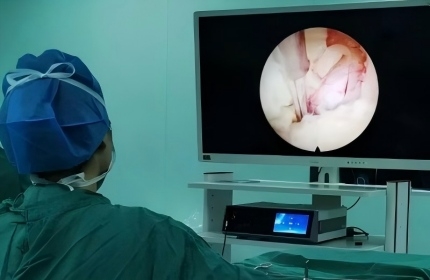
The main risks of the interlaminar approach arise from proximity to the dural sac, nerve root, and surrounding structures. A puncture that is too deep or too medial, or poor ligamentum flavum handling, can cause dural injury, nerve-root irritation, or cerebrospinal-fluid leakage. Preoperative imaging and standardized steps reduce these risks.
Root mobility, color, and distance from the instruments should be monitored continuously. Traction, thermal injury, and removal of the wrong tissue can all affect neurologic function. Movements should be reversible, and the procedure should pause whenever a neural structure is obscured or cannot be identified.
Continuous irrigation preserves the view, but excessive pressure, restricted outflow, or prolonged operating time can cause fluid extravasation, soft-tissue swelling, or changes related to intracranial pressure. The team should document irrigation and adjust according to the field, return, and patient condition rather than reflexively increasing pressure.
Bleeding from bone or soft tissue after discectomy can affect visualization and recovery. Precise radiofrequency hemostasis, a final inspection, and selective use of drainage can reduce hematoma-related compression. Significant bleeding should be controlled before closure.
Postoperative review includes pain, sensory and motor changes, wound status, and recurrence risk. Activity restrictions, positioning guidance, bracing, and functional exercise should reflect the extent of decompression, disc condition, and the patient's baseline, with follow-up shared across spine surgery, rehabilitation, and nursing teams.
Medical content notice: This article is intended for professional health communication and website editorial use. It is not a diagnosis, treatment recommendation, or endorsement of a specific technique. Indications, puncture planning, irrigation settings, and rehabilitation must be determined by qualified spine, anesthesia, and nursing teams for the individual patient.

+86-18001668150
Building 5A, No. 9628, Hunan Highway, Pudong New Area, Shanghai, China
 Links:
Shanghai Shiyin Photoelectric Instrument Co.,Ltd. All Right Reserved